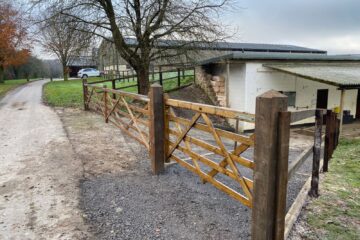
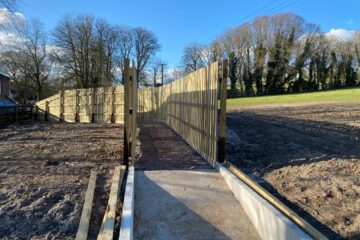
The fibresand surface of a covered training track carries an enormous daily workload and its condition has a direct effect on the wellbeing and performance of the horses who use it. Over time the fibresand naturally compacts, the structure tightens, and the material drifts towards the bends, even when the surface is well maintained. Eventually the point comes when routine harrowing is no longer enough to keep the track in its best state.
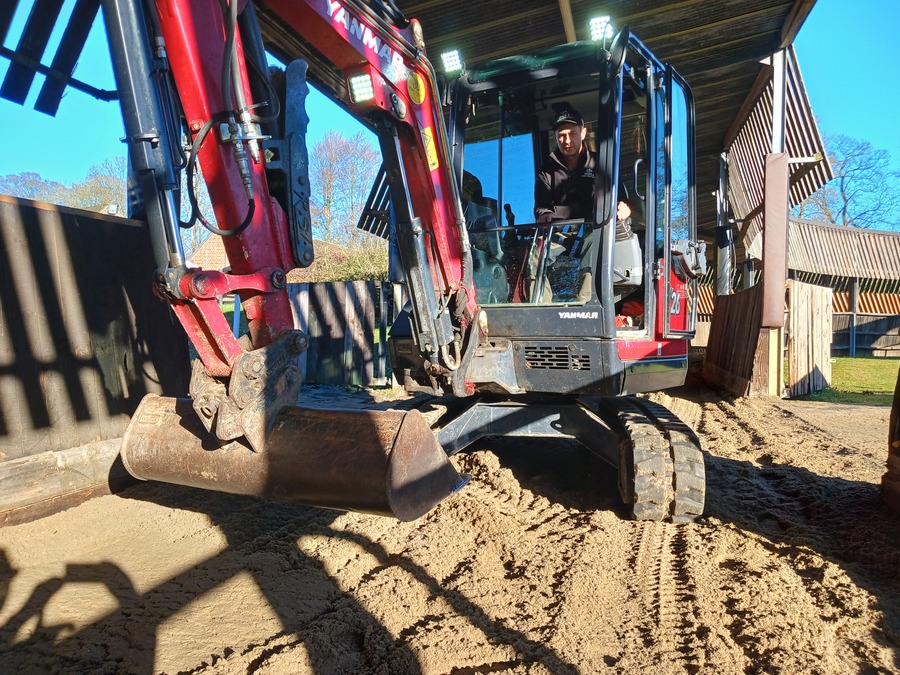
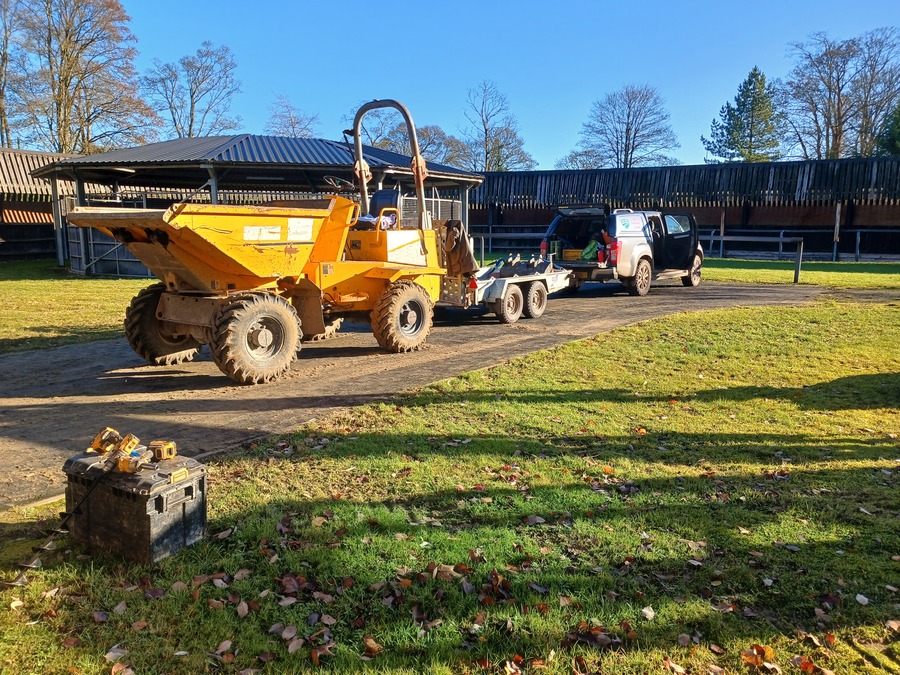
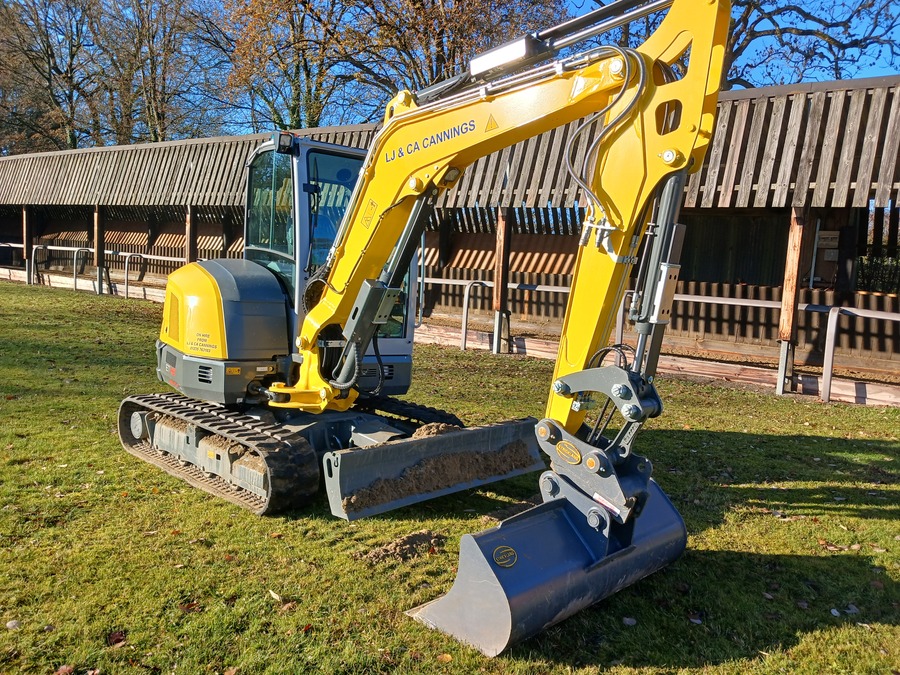
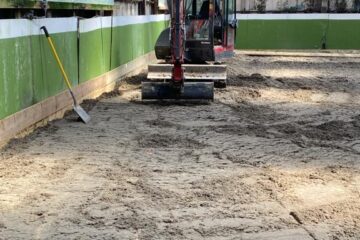
Noll Services was engaged to undertake a full restoration of a track that had reached this stage. The work needed to be completed within a single weekend to avoid disruption to training, which placed considerable emphasis on efficiency and planning. Using two excavators, the team dug out every part of the fibresand layer, working right back to the underlying base. This made it possible to loosen, turn, and fully remix the entire depth of material, breaking up years of compaction and restoring its original structure and resilience.
Once the fibresand was ready to be relaid, a series of depth holes placed around the circuit revealed just how much the surface had shifted over time. Several cubic metres of sand had migrated towards the corners and had to be brought back to the straights to achieve a true, even profile.
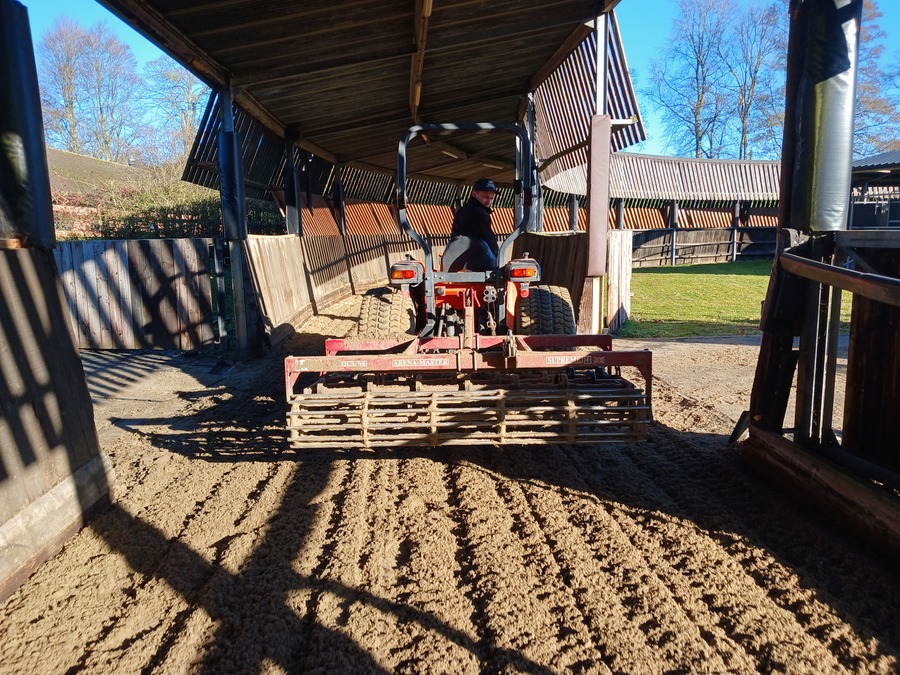
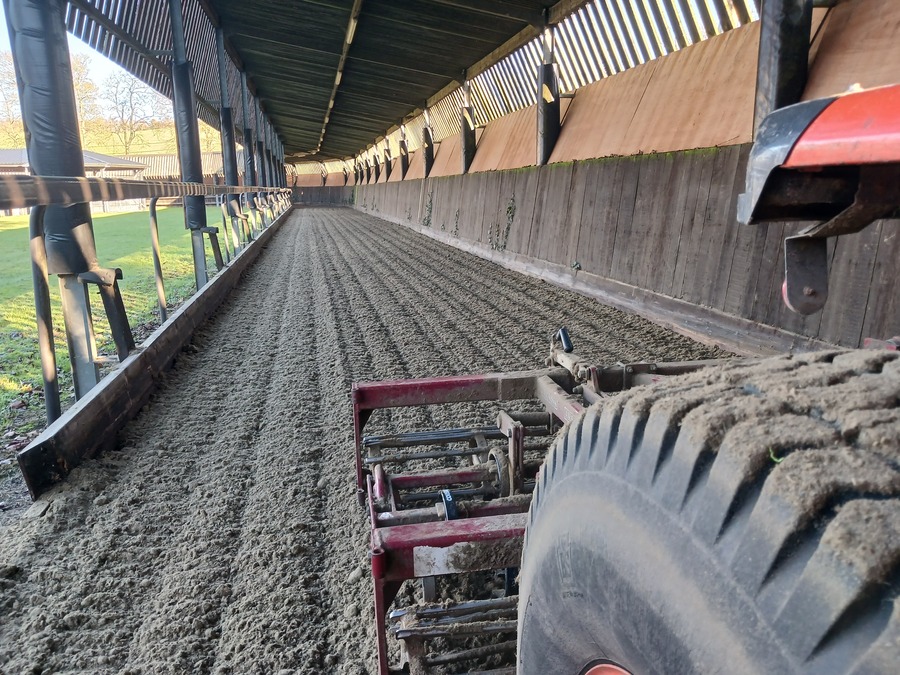
When the work was complete, the transformation was clear to anyone walking the track. The surface regained its soft, consistent feel with an even depth underfoot and no hard spots or ridges. Thanks to the restoration, the track is now back in peak condition and ready to give the best possible support to the equine athletes who train on it each day.